English
 Español
 عربى
عربى

1. Evolution of Modern Upholstery Textiles in Global Manufacturing
The global furniture manufacturing industry has witnessed a major shift in material selection over the past few decades. For export-oriented sofa producers and interior textile distributors, balancing aesthetic sophistication with long-term structural durability is a constant challenge. In the residential and commercial furniture sectors, a sofa is not merely a visual centerpiece; it is a high-contact asset subjected to daily physical stress, friction, environmental exposure, and staining. Consequently, the engineering behind upholstery textiles has evolved from a focus on basic thread assembly to sophisticated textile design involving complex weaving methods and high-performance synthetic polymers.
Historically, standard plain weave and basic twill fabrics dominated the mass-market sofa landscape due to their straightforward production methods and lower initial material costs. However, as global consumer expectations have risen, these basic weaves frequently fall short in luxury and heavy-commercial settings. Plain weaves display flat visual surfaces and suffer from faster structural breakdown when exposed to concentrated frictional forces. To address these limitations, advanced weaving technologies, particularly computer-controlled Jacquard looms, have been introduced to create deeply textured, multi-dimensional geometric structures that naturally disperse wear while offering premium aesthetic value.
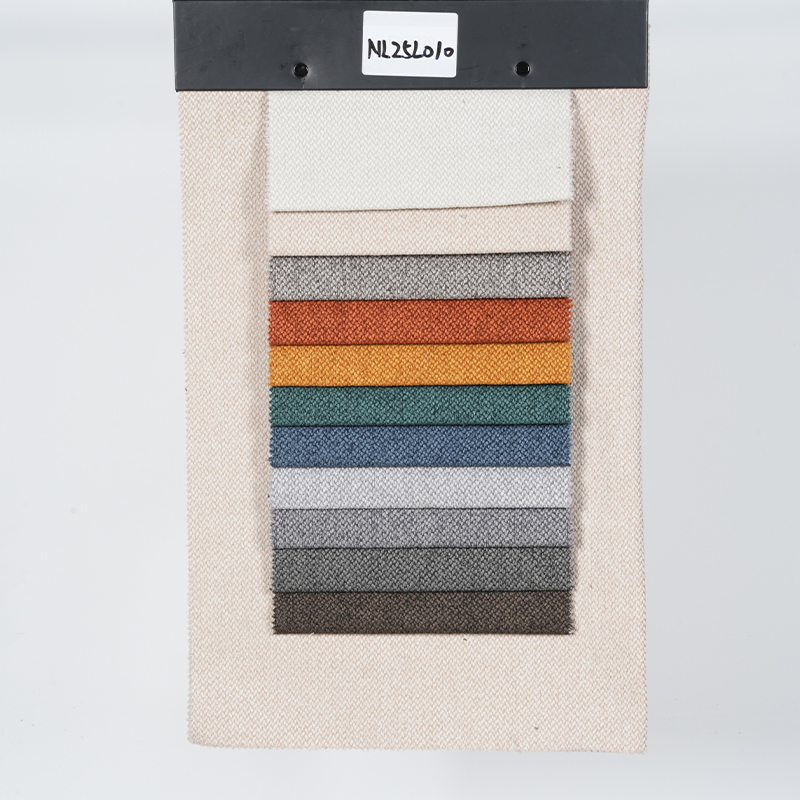
Among these advanced developments, Herringbone Jacquard Polyester Sofa Fabric represents a highly successful integration of classical geometric styling and modern synthetic polymer technology. By integrating the famous V-shaped herringbone pattern directly into the structural matrix of the cloth via specialized warp and weft control, this material provides furniture manufacturers with a premium alternative to basic fabrics. Understanding the structural properties, industrial durability metrics, and processing advantages of this specific fabric class is essential for international procurement managers and furniture brands aiming to deliver high-value products to competitive overseas markets.
2. Structural Anatomy: Jacquard Intricate Weaving vs. Plain Weave Networks
To fully evaluate why a complex fabric performs better over long life cycles, it is necessary to examine the physical engineering differences between plain weaving and Jacquard texturing. In a standard plain weave, the horizontal weft yarn crosses over a single vertical warp yarn in a simple alternating grid pattern. While this creates a uniform cloth, it produces a flat profile where individual threads are exposed evenly to abrasive contact. When external friction rubs against a plain weave surface, the constant scraping quickly breaks the outer fibers, leading to thin spots, thread separations, and premature tearing along the main seams.
In contrast, Jacquard weaving utilizes an automated loom mechanism capable of lifting individual warp threads independently of the surrounding bundle. This freedom allows for the creation of complex geometric configurations, such as the classic herringbone pattern, where the direction of the diagonal lines reverses at regular intervals. The resulting fabric features a raised chevron texture where yarn floats are arranged securely to distribute external mechanical stress across a wider surface area. Rather than concentrating friction on a single vulnerable thread, the herringbone layout naturally deflects downward rubbing forces, drastically delaying structural fatigue.
Furthermore, the physical thickness and dimensional stability of a Jacquard textile are inherently superior to plain options. Because multiple thread layers are interlaced at varying heights to form the chevron geometric imagery, the fabric achieves a higher weight per square meter without requiring heavy chemical backings. This density provides a full, premium feel when upholstered onto dense foam cushions, ensuring the fabric retains its crisp shape and avoids sagging, stretching, or shifting even after thousands of compression cycles.
3. Technical Performance Evaluation Matrix
When selecting materials for large-scale furniture production, design teams must analyze multiple mechanical and practical metrics. The following table contrasts the performance of premium Herringbone Jacquard polyester upholstery against standard plain weave synthetic fabrics.
| Performance Parameter | Standard Plain Weave Polyester Fabric | Herringbone Jacquard Polyester Sofa Fabric |
|---|---|---|
| Surface Texture Profile | Flat, uniform, two-dimensional appearance | Raised, multi-dimensional geometric chevron pattern |
| Abrasion Resistance (Martindale Cycles) | Typically ranges from 15,000 to 25,000 rubs | Exceeds 40,000 to 60,000 rubs under identical testing |
| Dimensional Stability | Prone to bias stretching and localized bagging | High resistance to stretching; retains form across large frames |
| Seam Slippage Prevention | Moderate; thin warp-weft bonds can separate under load | Excellent; dense internal interlacing locks yarns in place |
| Visual Defect Masking | Poor; minor surface pulls or piling are instantly visible | Excellent; rich geometric pattern naturally masks minor usage wear |
| Upholstery Tailoring Flex | Standard; can look stiff on rounded roll-arm edges | Superb drape; conforms smoothly to sharp angles and tufting |
4. Mechanical Superiority: Abrasion, Tensile Strength, and Seam Integrity
Upholstery fabrics deployed in heavy-use environments encounter intense mechanical stresses daily. The primary standard for measuring fabric durability in international markets is the Martindale Rub Test. During this testing procedure, a piece of fabric is loaded into a machine and rubbed in a continuous figure-eight pattern against a standard abrasive wool surface. A plain weave synthetic fabric often reveals fiber breakdown, broken threads, or holes after 20,000 cycles, classifying it for light domestic duty. In comparison, a dense herringbone jacquard structure easily withstands over 40,000 to 60,000 cycles before showing signs of wear, making it suitable for demanding commercial settings like hotel lobbies or office spaces.
Beyond surface abrasion, tensile strength and seam integrity are critical factors when tailoring high-tension furniture styles. When a person sits on a sofa, immense lateral tension is applied to the seams where the fabric panel meets the structural wooden frame. In basic plain fabrics, the uniform grid structure allows threads to pull apart under tension, an issue known as seam slippage. This leaves unsightly gaps and exposes the foam beneath. The interlocking weave of a jacquard herringbone binds the warp and weft sets together tightly, distributing stress vectors in multiple directions and preventing thread separation under heavy loads.
This structural strength also helps prevent pilling, which occurs when loose fibers break due to friction and tangle into small fuzzy balls on the surface. Because the long-chain polyester fibers are woven deep into the jacquard pattern rather than floating loosely on a flat surface, they remain locked within the core yarn structure. This minimizes fiber release and ensures the sofa maintains a smooth, lint-free appearance throughout its operational lifespan.
5. Polymer Advantage: Polyester Resins vs. Natural Fiber Limits
While the weaving method dictates a fabric's physical structure, the raw polymer material dictates its chemical properties and resilience. Natural fibers like cotton, linen, and wool are valued for their softness, but they present significant challenges in modern furniture production. Natural materials absorb moisture easily, stretch out of shape, fade rapidly under sunlight, and are highly susceptible to staining and rot. For international furniture exporters, relying on natural fibers can increase the risk of product damage during humid sea freight transit.
Utilizing high-grade polyester resins for herringbone jacquard fabrics eliminates these material vulnerabilities. Polyester is inherently hydrophobic, meaning the fibers absorb very little water. When liquids are spilled on the surface, they sit on top of the weave rather than absorbing deeply into the yarn core, allowing for quick cleaning before a permanent stain can form. This moisture resistance also prevents mold, mildew, and bacteria growth, ensuring the furniture remains hygienic over time.
From an environmental exposure perspective, polyester offers outstanding resistance to ultraviolet light. Sofas placed near windows or under bright showroom lights are exposed to constant solar radiation, which can break down natural dye bonds. Polyester fibers absorb dye under extreme heat and pressure during the manufacturing process, locking the color into the molecular structure of the plastic. This delivers excellent colorfastness to light, ensuring bold, complex geometric designs remain vibrant without fading even after years of sun exposure.
6. Acoustic Insulation and Ergonomic Comfort in Commercial Spaces
Modern interior design emphasizes open-concept layouts with expansive glass windows, polished concrete floors, and exposed architectural elements. While visually stunning, these hard surfaces reflect sound waves easily, creating noisy, echoes in hotel lobbies, corporate offices, and restaurant lounges. To counter this, interior designers rely heavily on large upholstered furniture pieces to act as acoustic dampening assets. A flat, thin plain fabric provides minimal acoustic insulation, allowing sound waves to bounce back into the room.
The intricate structure of a herringbone jacquard fabric provides excellent sound absorption properties. The raised chevron pattern creates a textured surface that scatters incoming sound waves, breaking up their energy. Additionally, the multi-layered weaving method creates micro-pockets of air trapped between the warp and weft layers. These micro-voids capture sound vibrations, converting them into tiny amounts of thermal energy and significantly lowering ambient noise levels. This acoustic benefit makes jacquard-covered sofas highly desirable for commercial spaces where a quiet atmosphere is preferred.
From an ergonomic perspective, this texture also improves seated comfort. The multi-dimensional design allows air to circulate naturally beneath the occupant, preventing heat buildup during long sitting periods. This breathability, combined with the premium texture of the jacquard weave, creates an engaging sensory experience that enhances the overall perception of the furniture piece.
7. Processing and Upholstery Efficiency for Manufacturers
For factory production teams, a textile's value is determined not just by how it looks on a finished product, but by how efficiently it processes on the cutting table. Upholstery fabrics must be easy to roll out, mark, cut, and sew without warping or fraying along raw edges. Plain fabrics, while simple to align, can shift diagonally on automated cutting tables, causing asymmetric panel dimensions that disrupt fast assembly lines.
Herringbone jacquard fabrics provide excellent stability during automated cutting and industrial sewing. The balanced diagonal vectors of the chevron pattern create natural lines that guide cutting operators and computerized laser cutters alike. When pulling the fabric over tight wooden frames or padding layers, the material stretches evenly across both the vertical and horizontal axes, preventing the wrinkling or twisting often seen with thin plain materials.
Furthermore, the edge stability of jacquard woven polyester minimizes fraying during high-speed stitching. When industrial sewing needles pierce the fabric border, the interlocked internal structure prevents individual threads from unraveling from the main weave. This enables tighter, cleaner stitching paths, allowing factories to accelerate output speeds, reduce material waste, and lower production labor costs.
8. Coloration Techniques and Complex Geometric Patterns
The visual appeal of furniture relies heavily on color depth and patterning. Standard plain materials are limited to solid piece-dyeing or surface printing, which can look flat and fade as the outer print layer wears off. Creating intricate patterns like a herringbone on a plain base requires top-surface printing, which can peel or wear away over time.
Jacquard weaving builds patterns into the structure of the fabric using yarn-dyeing techniques. Individual yarns are dyed in specific color batches before being loaded onto the loom. As the loom weaves the pattern, different colored threads are brought to the surface to form the herringbone design. This method ensures the pattern runs through the entire thickness of the material, making it impossible to rub or wear off.
This yarn-dyed jacquard method also creates rich, dual-tone color variations. By weaving contrasting yarn colors together—such as charcoal with soft gray, or deep navy with cream—the herringbone pattern displays subtle shifts in tone depending on the viewing angle and lighting. This visual depth elevates the appearance of finished sofas, helping manufacturers command premium pricing in international wholesale markets.
9. Maintenance, Stain Resistance, and Longevity Over Time
The real test of an upholstery material occurs in everyday settings where pet claws, spilled drinks, and dropped food challenge the fabric's integrity. For families and busy commercial properties, high-maintenance fabrics that require professional dry cleaning are impractical. If a fabric is difficult to maintain, its visual appeal quickly degrades, leading to premature furniture replacement.
Polyester jacquard fabrics require minimal maintenance. Because polyester is synthetic and low-absorbent, dry soils like dust, pet hair, and lint do not stick easily to the fibers and can be removed with standard vacuuming. For wet spills, the tight weave limits fluid penetration, allowing users to blot liquids up with a damp cloth before they soak into the cushion foam underneath.
The complex herringbone pattern also provides practical benefits by naturally masking minor soil and daily wear. While a flat plain weave highlights every small speck of dust or minor stain, the textured chevron pattern breaks up visual surfaces, keeping the furniture looking clean between maintenance intervals and extending its usable lifespan.
10. Regulatory Compliance and Safety Standards for Global Distribution
Exporting upholstered furniture worldwide requires strict adherence to international safety and environmental regulations. Different countries enforce specific fire safety rules for residential and commercial furniture. Materials exported to the United Kingdom must meet BS 5852 standards, while those sent to North America often require compliance with California Technical Bulletin 117-2013, which tests a fabric's resistance to smoldering cigarettes and open flames.
Polyester fibers respond exceptionally well to clean fire-retardant treatments. Because polyester is stable under thermal processing, manufacturers can apply environmentally safe fire-retardant finishes during the final washing and setting stages without altering the fabric's softness or pattern clarity. These treated jacquard fabrics pass international flammability tests reliably, preventing customs issues and project rejections.
Additionally, modern polyester production facilities operate under strict environmental standards like OEKO-TEX Standard 100. This certification guarantees that the textile contains no harmful levels of toxic chemicals, heavy metals, or volatile organic compounds. By choosing certified polyester jacquard fabrics, exporters can confidently enter strict international markets, knowing their products meet all health, safety, and environmental guidelines.
11. Conclusion
Choosing between Herringbone Jacquard Polyester Sofa Fabric and standard plain weave options is a decisive factor for furniture brands aiming to establish a strong presence in international export markets. The limitations of basic flat fabrics—such as accelerated wear patterns, susceptibility to seam slippage, flat aesthetics, and high maintenance needs—can compromise a furniture brand's market standing.
The advanced construction of herringbone jacquard fabrics solves these issues by delivering high abrasion resistance, excellent dimensional stability, natural sound dampening, and efficient processing on production lines. By utilizing high-performance polyester fibers in an elegant geometric structure, furniture manufacturers can produce premium sofas that withstand heavy use, comply with global safety standards, and satisfy the aesthetic and functional demands of international consumers.